Kitchen cabinets take up a lot of visual space, so changing their doors, color, or finish can dramatically affect how the whole room looks. Once homeowners replace older cabinet fronts with a cleaner, more current style, they sometimes notice something unexpected: other parts of the kitchen suddenly seem older than before.
That does not mean the new cabinet doors made your counter top, backsplash, flooring, or appliances outdated. Instead, the updated cabinetry creates a new visual reference point, making differences in style, color, condition, and age easier to notice.
Most importantly, you do not have to remodel the entire kitchen after cabinet refacing. The goal is to identify which surrounding features still work well, which small updates could improve the finished look, and which larger projects can wait.
Why Can New Cabinet Doors Make Other Kitchen Features Look Older?
The reason is largely visual contrast.
When most of a kitchen was installed or updated around the same time, its finishes may feel consistent even if the overall design is beginning to show its age. The cabinet doors, counter top, backsplash, lighting, hardware, and flooring may all share similar colors, materials, or styling.
Change one of the largest features in that group, and the room’s balance changes too.
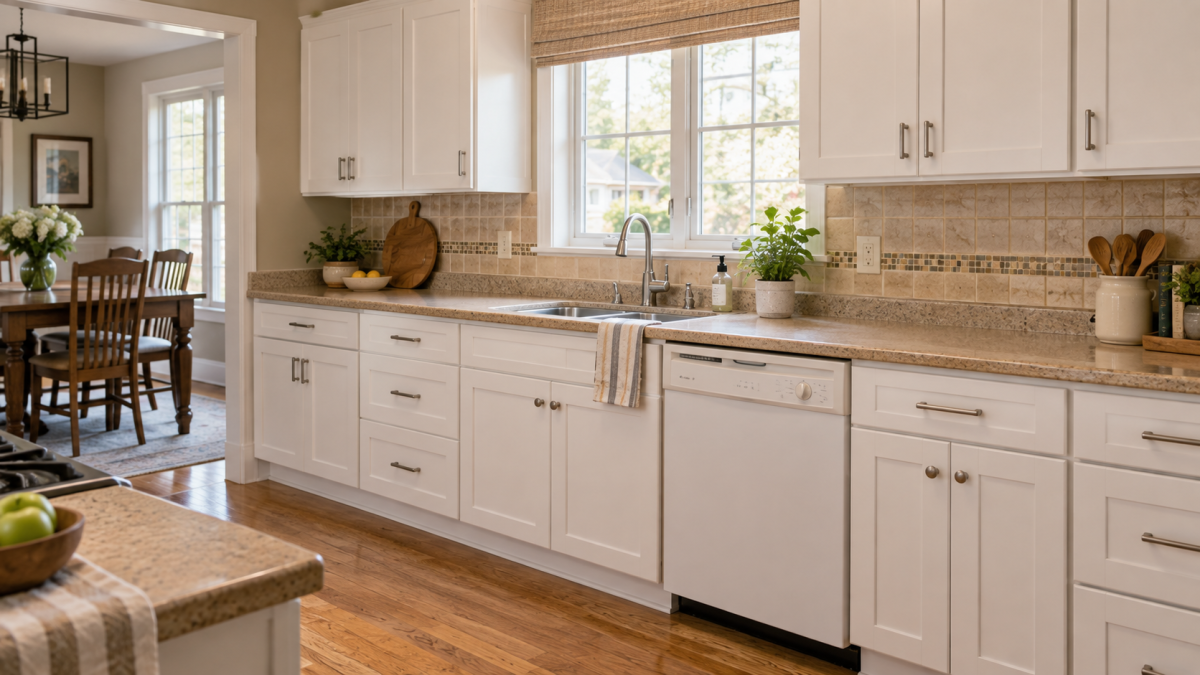
For example, imagine a kitchen with raised-panel oak cabinet doors, beige countertops, decorative hardware, and a patterned backsplash. Those elements may feel cohesive because they belong to a similar design style.
Now replace the cabinet doors with a simple white Shaker-style design. The counter top and backsplash haven’t changed, but they may suddenly draw more attention because they contrast more strongly with the updated cabinetry.
Cabinet refacing didn’t make those features outdated. It simply changed what your eye compares them to.
1. Cabinet Hardware
Hardware is one of the first details to evaluate when replacing or refacing cabinet doors because it is physically attached to the cabinetry.
Knobs and pulls that worked well with the previous door style may not have the right proportion, shape, or finish for the new design. Ornate handles, mismatched pieces, or highly decorative hardware may look visually busy on a simple new cabinet door.
That does not mean every older hardware finish needs to go. Design trends cycle, and finishes such as brass can work beautifully in both traditional and current kitchens. The better question is whether the hardware complements the new cabinet style.
Updating knobs, pulls, handles, and visible hinges can also be one of the easiest, more affordable ways to make a cabinet refacing project feel complete.
2. Countertops
Countertops sit directly beside the cabinets, so their color and pattern strongly influence how the two surfaces work together.
A counter top chosen specifically to coordinate with a previous wood tone may feel different beside a new white, gray, painted, or lighter cabinet finish. Similarly, a heavily patterned surface that seemed balanced with traditional cabinets may appear busier once the cabinetry becomes more streamlined.
Before assuming the countertops need replacement, consider three possibilities.
First, the existing counter top may still coordinate very well with the new doors. In that case, there is no reason to change it.
Second, smaller updates such as new hardware, paint, or backsplash details may help connect the counter top and cabinetry more effectively.
Third, if you already disliked the counter top or it is worn or damaged, cabinet refacing may simply make it easier to decide that replacement belongs on your future project list.
The key point is that new cabinet doors don’t automatically require new countertops.
3. The Backsplash
A backsplash can strongly influence a kitchen’s overall style because it sits between two major surfaces: the cabinets and countertops.
When cabinet colors change, backsplash colors and patterns can read differently. A tile combination designed around dark wood cabinetry, for example, may create a much stronger contrast next to lighter cabinet doors.
Decorative accent bands, busy patterns, or colors tied closely to the former cabinet finish may also stand out more after refacing.
Rather than deciding that a particular tile style is universally outdated, evaluate whether the backsplash still works with the new cabinet color, counter top, and overall direction of the room.
Sometimes it will. Sometimes a backsplash update can provide the final connection between new cabinetry and the rest of the kitchen.
4. Sink and Faucet
The sink and faucet are functional features, but they are also highly visible, especially when newly updated cabinet doors draw more attention to the surrounding work areas.
After refacing, you may notice an older faucet style, a worn finish, a scratched or stained sink, or metal finishes that no longer feel coordinated with the cabinet hardware.
That does not mean every metal finish has to match exactly. A faucet and cabinet pulls can complement each other without being identical.
If you are considering a kitchen sink upgrade in your Pittsburgh-area home, look at the sink, faucet, counter top, and cabinet hardware as a group. A relatively focused fixture update may be enough to make the area feel more cohesive without expanding the project into a larger remodel.
5. Kitchen Lighting
Lighting affects more than visibility. It also changes how cabinet colors, finishes, countertops, and hardware appear.
A newly refaced kitchen may call attention to an older decorative fixture, fluorescent ceiling box, dated pendant style, or simply inadequate lighting. Very warm or uneven light can also affect how a new cabinet finish looks throughout the day.
Better lighting can help highlight the cabinet door profile, new hardware, countertops, and work areas. In some kitchens, replacing a main fixture or adding under-cabinet lighting can make a noticeable difference without major construction.
As with the other features on this list, you don’t need to replace lighting just because the cabinet doors change. Evaluate whether it is functional and whether it supports the new look.
6. Flooring
Flooring is another large visual surface, which means a major change in cabinet color can alter how the floor is perceived.
Consider the floor’s wood tone, tile pattern, grout color, condition, and overall color temperature. For example, if a kitchen changes from warm oak cabinetry to a cooler or lighter finish, a warm-toned floor may stand out more.
That is not automatically a problem.
Contrast can make a room more interesting when the colors still work together. Homeowners should focus on whether the flooring genuinely clashes with the new cabinet design—not simply whether it looks different than it did before.
If the flooring is durable, in good condition, and reasonably coordinated with the updated cabinetry, replacing it purely for cosmetic reasons may not be necessary.
7. Appliances
Fresh cabinetry can also make older appliances more noticeable.
The difference may come from appliance color, visible wear, older handle designs, mixed finishes, or the way the appliances sit beside cleaner-looking cabinet doors.
Function should still matter more than cosmetics. A refrigerator, range, or dishwasher that works properly doesn’t need replacing just because the kitchen cabinets have been refaced.
Instead, functioning appliances can remain until replacement makes sense for practical reasons. When that time comes, you can choose new finishes and styles with the updated kitchen in mind.
What About Wall Color, Trim, and Other Smaller Details?
Not every improvement needs to involve a major surface or fixture.
Wall paint, crown molding, cabinet trim, window treatments, switch plates, outlet covers, bar stools, rugs, and decorative accessories can all affect how finished the kitchen feels.
These smaller changes may offer more visual impact per dollar than replacing a counter top, floor, or appliance. A new wall color, for example, may help connect existing countertops with freshly refaced cabinets and make the entire room feel more intentional.
Before planning another large project, start with the smaller details.
Do You Have to Update the Rest of the Kitchen After Cabinet Refacing?
No. Cabinet refacing can work as a standalone kitchen improvement. Updating cabinet doors doesn’t mean you also have to replace the countertops, floors, appliances, backsplash, or other kitchen features.
Evaluate each part of the room separately based on its condition, function, compatibility with the new cabinet design, your preferences, and your budget.
One advantage of cabinet refacing is that it can create a significant visual change without automatically turning the project into a complete kitchen renovation.
If the rest of the kitchen still works for you, you can leave it.
Which Kitchen Updates Should You Prioritize After Refacing?
If you want to make additional improvements, prioritize them by cost, complexity, and visual impact.
Easy or Lower-Cost Updates
Smaller projects can often bridge the gap between new cabinetry and older surroundings:
- Cabinet hardware
- Wall paint
- Faucet
- Light fixtures
- Switch plates
- Decorative accessories
These are often good places to start because they can change how the kitchen feels without requiring major demolition.
Moderate Updates
Projects such as a new sink, backsplash, targeted lighting improvements, or certain counter top modifications require more planning but may noticeably improve the relationship between the cabinetry and surrounding finishes.
Consider these when an existing feature genuinely looks disconnected from the new design.
Larger Updates
Full counter top replacement, new flooring, an appliance package, or structural changes should usually be driven by condition, function, or homeowner preference, not simply because you updated the cabinet doors.
A successful refacing project does not obligate you to keep remodeling.
Should You Plan These Updates Before Cabinet Refacing?
Consider the entire kitchen before choosing a cabinet door style, color, hardware, or finish, even if you don’t plan to update anything else immediately.
Look carefully at the features you intend to keep, especially the countertops, flooring, backsplash, and appliances.
Choosing cabinet finishes that already work with those elements can make the completed project feel more cohesive and reduce the temptation to replace perfectly usable materials afterward.
You do not need to commit to every future improvement. You want the new cabinet design to work with the kitchen you actually have.
Can Cabinet Refacing Modernize a Kitchen Without a Full Remodel?
Yes. If the existing cabinet boxes and kitchen layout are still functional, cabinet refacing can significantly change the kitchen’s appearance without replacing the entire cabinet system.
New doors and updated finishes can act as the anchor improvement. From there, homeowners can decide whether other changes are worthwhile.
Those improvements can be optional, selective, and phased over time. You might update the hardware now, change a light fixture later, and keep the existing floor and appliances for years.
That flexibility is one reason refacing can make sense for homeowners who like their kitchen layout but no longer like the way their cabinets look.
Frequently Asked Questions
Do I need new countertops if I reface my cabinets?
No. Existing countertops can often stay if they are in good condition and coordinate reasonably well with the new cabinet style and color. Before replacing them, see how the finished cabinetry changes the room. If the counter top still works visually and functionally, there may be no reason to add that expense.
Should I replace the backsplash when refacing cabinets?
Not necessarily. Evaluate a backsplash based on how well it works with the new cabinet color, countertops, and overall kitchen design. Cabinet refacing may make an older backsplash more noticeable, but if the colors and style still complement the room, you can keep it.
Can I keep my existing appliances after cabinet refacing?
Yes. Functioning appliances generally don’t need replacing just because your cabinets look newer. If an appliance still performs well, keeping it can help control the project’s scope and cost. You can coordinate future replacements with the updated cabinetry when you actually need them.
Should cabinet hardware match the kitchen faucet?
Cabinet hardware and the kitchen faucet can coordinate without matching exactly. Complementary metal finishes often work well together when they share a similar visual style or undertone. Look at the faucet, hardware, lighting, and nearby finishes together rather than treating each metal element as an isolated decision.
What is the easiest way to make an outdated kitchen look newer?
Cabinetry can have a major visual impact because it occupies so much space in the room. Refacing cabinets can create a significant transformation, while smaller changes such as new hardware, paint, lighting, and fixtures can further modernize the kitchen without a full renovation.
Can you update a kitchen without doing a full remodel?
Yes. Cabinet refacing and selective cosmetic improvements can update a kitchen’s appearance while letting homeowners keep usable countertops, flooring, appliances, and other components. The result can be a noticeable kitchen facelift without the scope, disruption, or expense associated with replacing everything at once.
Make the Cabinets the Anchor of Your Kitchen Update
New cabinet doors don’t make the rest of your kitchen look outdated. They update one of the room’s largest visual features, making differences in color, style, condition, and age easier to see.
That lets you evaluate the rest of the kitchen, without needing to replace it.
If your cabinet boxes are still in good condition but the doors and finishes make the entire room feel dated, cabinet refacing may provide the transformation you are looking for without a complete remodel.
Contact Desirable Kitchens to explore cabinet door styles, finishes, and kitchen cabinet refacing options for your Pittsburgh-area home.