Desirable Kitchens and Refacing logo
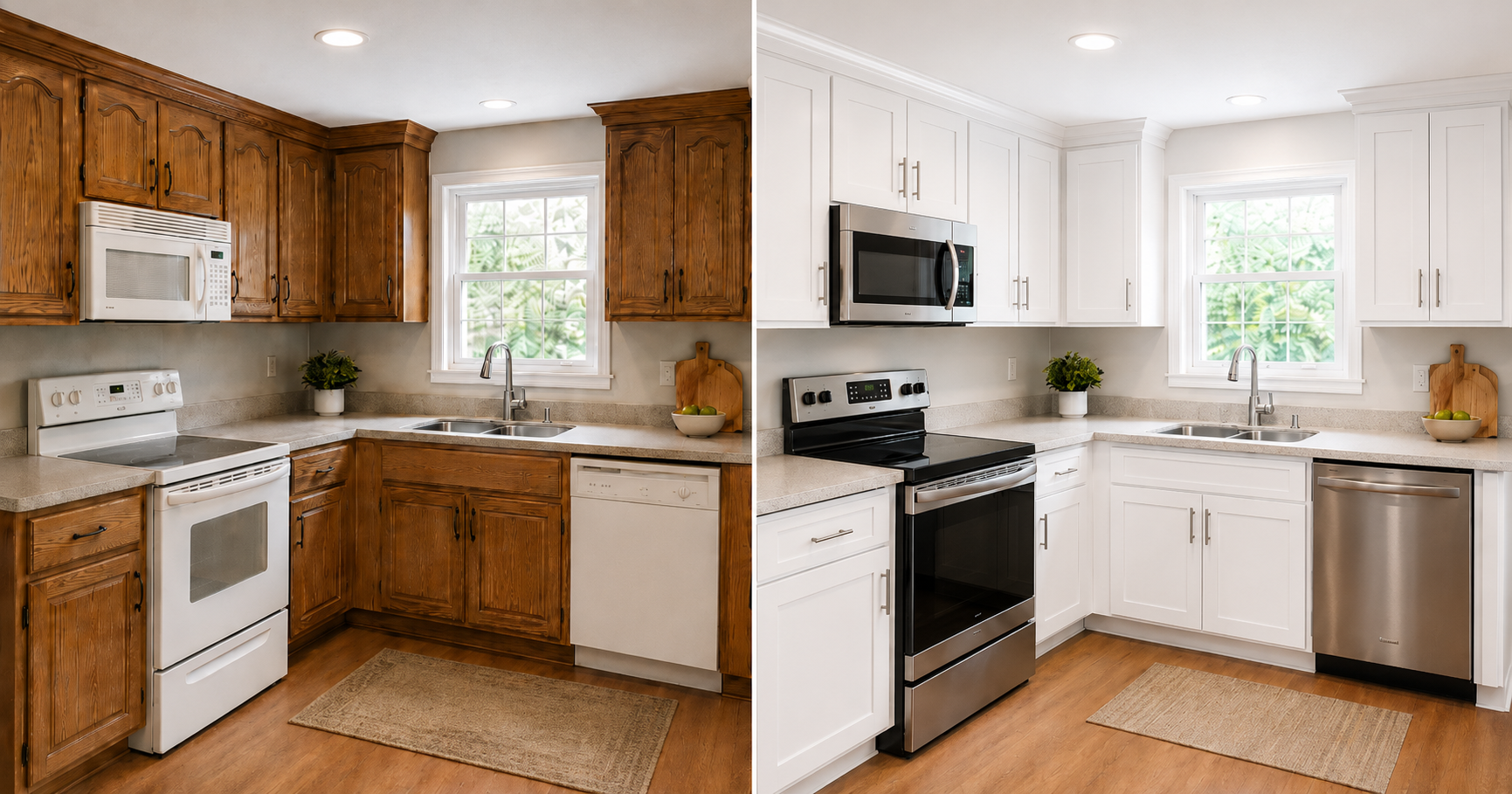
Updating kitchen cabinets can quickly become confusing. One contractor may recommend painting, another may suggest refinishing, and another may use terms such as refacing or resurfacing. Although these services sound similar, they involve different processes and produce different results.
The right option depends on:
For Pittsburgh homeowners with older but sturdy cabinets, understanding the difference between cabinet refacing and refinishing can help you choose a service that fits your kitchen and goals.
Cabinet painting changes the color of existing doors, drawer fronts, and cabinet boxes. It works best when the cabinets are in good condition and you like the current door style.
Cabinet refinishing restores or changes the finish on existing cabinet surfaces. It is commonly used for quality wood cabinets when the homeowner wants to preserve or update the wood’s appearance.
Cabinet refacing keeps the cabinet boxes but replaces the doors and drawer fronts. Visible cabinet box surfaces are also updated to match.
Cabinet resurfacing is used differently by different contractors. It may refer to painting, refinishing, refacing, or another surface treatment.
Cabinet replacement removes the existing cabinet system and installs new cabinets. It is generally best when the layout, storage, or cabinet structure no longer works.
Kitchen cabinet painting keeps your existing doors, drawer fronts, boxes, and layout. The surfaces are cleaned, prepared, primed, and painted.
Painting can refresh a kitchen without replacing the visible cabinet components. It may work well when you like the shape of your cabinet doors but want a different color.
However, painting does not change the door design. It also cannot correct warped doors, damaged drawer fronts, failing cabinet boxes, or an inefficient layout.
Proper preparation matters. Grease, old coatings, and surface damage can affect paint adhesion. Painted cabinets may chip, peel, or fade if the surfaces are not prepared correctly or are not suitable for painting.
Painting is a practical option for the right kitchen, but it changes the color rather than the cabinet design.
Cabinet refinishing updates the existing cabinet surfaces similar to painting, but also includes the possibility of stain and a polyurethane coat. The current doors and drawer fronts usually remain in place.
The process may include more aggressive sanding, stripping, staining, sealing, repainting, or restoring the finish. Refinishing is often associated with wood cabinetry because it can preserve the grain while renewing or changing the stain.
The primary difference between refinishing and refacing is what happens to the visible components. Refinishing updates the existing doors and drawer fronts, while refacing often involves replacing them or covering them with quality material overlays.
Some companies use refinishing to include repainting. Ask the contractor whether the estimate includes paint, stain, sealing, restoration, or another treatment.
Cabinet refinishing vs. painting often comes down to material and appearance. Refinishing typically restores or changes wood, while painting covers the existing surface with a new color.
Cabinet resurfacing can often refer to painting or refinishing.
Because the term is inconsistent, homeowners should ask for a detailed written scope of work.
These questions make it easier to compare cabinet resurfacing and refacing without assuming every contractor offers the same service.
Cabinet replacement removes the existing cabinets and installs new boxes, doors, drawers, and related components. Everything goes out the door, and a fresh install is completed at a premium cost.
Replacement offers the most flexibility. Cabinet sizes can change, appliances can move, storage can be added, and the kitchen footprint can be redesigned.
When comparing cabinet refacing vs. replacement, consider whether the problem is appearance or function. If you like where the cabinets are but not how they look, refacing may be enough. If you dislike the layout, storage, or construction, replacement may be more appropriate.
Cabinet refacing keeps the cabinet boxes in place while changing the visible exterior.
The existing doors and drawer fronts are often removed and replaced for a different style. Exposed cabinet box surfaces are covered or updated with coordinating material. Hinges, hardware, trim, and other visible details may also be changed.
Refacing offers a middle-ground option between a surface update and full cabinet replacement. Refacing is a greater enhancement than painting or refinishing for a more polished finished product..
Desirable Kitchens & Refacing offers Pittsburgh cabinet refacing for homeowners who are satisfied with their layout but want to update the visible cabinet components.
The cabinet boxes should be inspected before refacing to confirm that they are stable and suitable for continued use.
Consider painting when you are on the tightest cabinet budget and don’t mind a bit more future maintenance.
Consider cabinet refinishing when you have quality wood cabinets with visible grain you wish to retain. Refinishing as a term can also be used to refer to paint, but staining is an entirely different finish than paint.
Consider cabinet refacing when the boxes and layout work, but you want new doors, drawer fronts, hardware, and visible surfaces. A cheaper alternative to replacement, a more durable and polished alternative to painting, and does not limit you to the appearance of the existing wood grain if you want a different natural wood appearance.
Ask for more details about resurfacing when a contractor does not clearly explain what will be painted, replaced, covered, or reused.
Consider replacement when the boxes are damaged, the layout is inefficient, or you want to move appliances and redesign the kitchen.
For many Pittsburgh homeowners, the decision comes down to budget, structure, and layout. If both still work, refacing can provide a noticeable update without having to start over. If either is failing, replacement may be the better choice.
Project cost depends on kitchen size, door count, cabinet material, hardware, drawer upgrades, trim, side panels, and finish selections.
In general:
Desirable Kitchens & Refacing states that many cabinet refacing projects can be completed in approximately three to five days, depending on the scope. Timelines may be longer when changes to countertops, backsplashes, plumbing, flooring, or appliances are included.
Painting is primarily a color update. The existing doors, drawer fronts, and visible surfaces stay in place.
Refacing changes more of the exterior. New doors and drawer fronts can introduce a different profile, material, color, and style. Hinges and hardware may also be updated.
Choose painting when you like the current cabinet style and only want a new color.
Choose refacing for a more complete cabinet makeover without changing the layout.
Refacing is the more future proof version of the two offering a longer lasting appearance upgrade.
Refinishing restores or changes the components that are already there. Refacing replaces more of the visible exterior of the cabinet.
Refinishing may be better for quality wood cabinets when you want to preserve the grain. Refacing may be better when you want a new door profile, new drawer fronts, updated hinges, and a broader style change.
Refacing keeps cabinet boxes that remain usable. Replacement removes the existing cabinets entirely and allows for changes to the layout, storage, appliance placement, and cabinet sizes.
If you have empty kitchen space where you wish to add cabinets, or need one cabinet box to be switched in order to change its function, these new cabinet segments can be refaced along side the rest of the kitchen to homogenize the appearance. This hybrid approach is still typically cheaper than a full replacement, and when done by a seasoned cabinet refacing professional can produce an indistinguishable finished product.
A helpful rule is:
Compare the written scope of work rather than looking only at the final price.
Ask whether the quote includes:
Desirable Kitchens & Refacing also provides countertop and backsplash services, including quartz, granite, and laminate options. Coordinating these services may help when cabinet work is part of a broader kitchen update.
There is no single solution for every kitchen.
Desirable Kitchens & Refacing can evaluate your existing cabinets, discuss your goals, and provide the trusted cabinet refacing services that have exceeded the expectations of past customers.
We do not provided painting or refinishing services for cabinets. We have found cabinet refacing to provide broader flexibility in affordable kitchen updates, as well as a more durable and enduring finished project.
No. Painting changes the color of existing cabinet surfaces. Refacing usually replaces the doors and drawer fronts while updating the visible cabinet box surfaces.
No. Refinishing updates existing surfaces. Refacing replaces more of the visible exterior.
It may refer to painting, refinishing, refacing, or another treatment. Ask the contractor exactly what materials and components are included.
Painting may work when the doors are in good condition, and you only want a color change. Refacing may be better when you want new doors, drawer fronts, hardware, and a more complete update.
No. Refacing works best when the boxes are structurally sound and the layout functions well.
Generally, no. Replacement or a larger remodel is usually needed to move cabinets or appliances.
It is most commonly used for quality wood cabinets. Laminate, thermofoil, and some MDF cabinets may not be suitable.
It can, but homeowners should confirm whether hinges, pulls, knobs, and drawer hardware are included.
No. Replacement is appropriate when the layout or cabinet structure no longer works. Refacing may be sufficient when the boxes and layout remain functional.
Ask whether you like the current layout, whether the cabinet boxes are solid, and whether you want a color change or an entirely new cabinet style. Budget considerations are also a deciding factor.
