Desirable Kitchens and Refacing logo
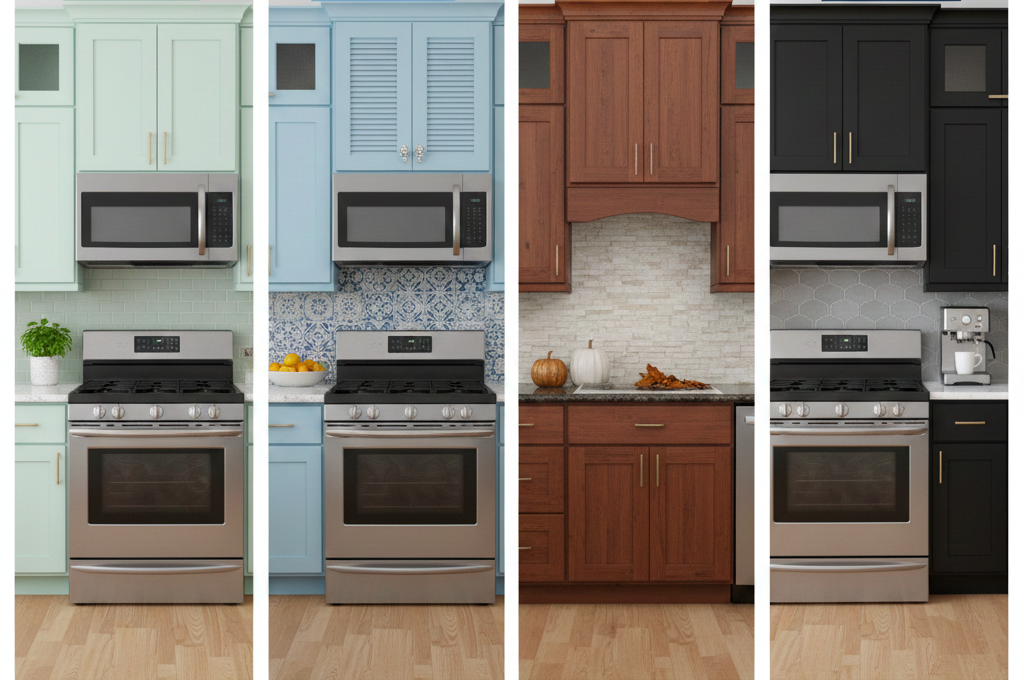
At Pittsburgh Desirable Kitchens, we often remind homeowners that kitchen design doesn’t have to be permanent. While many people still assume a kitchen remodel is a once-in-a-lifetime decision, cabinet refacing offers a different approach—one that allows your space to evolve, if you choose to.
For homeowners who enjoy changing finishes, following design trends, or adjusting their kitchen as life changes, cabinet refacing offers flexibility without requiring a full cabinet replacement each time.
At Pittsburgh Desirable Kitchens, we work with many homeowners who value flexibility just as much as aesthetics. Tastes evolve. Families grow. Styles change.
Some homeowners move from traditional to transitional styles. Others gravitate toward lighter finishes, simpler profiles, or more modern details over time.
Rather than designing a kitchen that feels “finished forever,” we help homeowners plan spaces that can adapt. Cabinet refacing supports this mindset by allowing surface-level changes without requiring a complete structural overhaul every time preferences shift.
For homeowners who plan their improvements strategically, flexibility becomes part of the design process—not an afterthought.
From our perspective, cabinet refacing works because it focuses on what truly needs to change—and what doesn’t.
Refacing keeps your existing cabinet boxes in place while updating visible components such as:
Cabinet doors
Drawer fronts
Finishes
Hardware
If the underlying cabinet structure is solid, there’s no need to replace everything to achieve a new look.
This approach allows homeowners to:
Update finishes when their style changes
Swap door profiles as design preferences evolve
Refresh hardware to match new trends
Adjust color palettes without changing layouts
Most importantly, updates happen on the homeowner’s timeline. Some clients reface once and keep their cabinets for decades. Others appreciate knowing they can update again later without starting from scratch.
Our designers see clear style transitions across Pittsburgh homes. Design trends don’t stand still, and neither do homeowner preferences.
Some of the most common shifts we see include:
Traditional kitchens evolving into transitional designs
Dark or heavy wood tones giving way to painted finishes
All-white kitchens shifting toward two-tone or textured cabinetry
Cleaner, simpler lines replacing ornate profiles
These changes don’t mean earlier choices were wrong. They reflect changing tastes, technology, and lifestyles.
Cabinet refacing supports these transitions by allowing homeowners to adjust the look of their space without discarding well-built cabinetry. Instead of tearing out what still works, refacing lets you adapt.
At Pittsburgh Desirable Kitchens, we don’t treat cabinet refacing as a universal solution. It’s one option—and a strong one—but only when it fits the home and the homeowner’s goals.
Cabinet refacing makes sense when:
Cabinet boxes are structurally sound
The existing layout works well
Storage needs are being met
Refacing keeps options open for future updates. It allows homeowners to enhance the appearance now while preserving the ability to refresh it again later.
Complete cabinet replacement is often the better choice when layouts need to change, storage is inadequate, or cabinet boxes are failing. In those cases, refacing wouldn’t deliver the long-term value homeowners expect.
Our role is to explain both paths clearly so homeowners can make informed—not pressured—decisions.
Before recommending cabinet refacing, our team evaluates several structural and practical factors.
We look closely at:
Cabinet box integrity and material quality
Signs of moisture damage or warping
Drawer and hinge performance
Overall kitchen layout functionality
Solid cabinet boxes are essential. Refacing relies on a strong foundation, and we’re upfront when existing cabinets won’t support this approach.
When conditions are right, refacing becomes a smart option for homeowners who want flexibility, long-term value, and the ability to refresh their kitchen without repeated full remodels.
When conditions aren’t right, we explain why—and discuss alternatives honestly.
For homeowners considering periodic kitchen updates, cost plays an important role. Cabinet refacing offers a scalable investment that fits long-term planning.
While every project is different, typical industry ranges include:
Small kitchens: $8,000–$12,000
Medium kitchens: $12,000–$18,000
Large kitchens: $18,000–$25,000
Compared to full cabinet replacement, refacing generally requires a lower investment while still delivering a noticeable visual impact.
Our approach at Pittsburgh Desirable Kitchens starts with long-term thinking. Even when homeowners aren’t planning frequent updates, we design kitchens that won’t limit future choices.
This includes:
Selecting cabinet boxes capable of supporting future refacing
Avoiding overly trendy structural decisions
Balancing current style with long-term adaptability
Considering resale value alongside personal enjoyment
We believe a kitchen should work for today while remaining adaptable for tomorrow. Cabinet refacing plays a key role in that philosophy—especially for homeowners who enjoy refreshing finishes without overhauling the entire space.
Design flexibility doesn’t mean sacrificing quality. It means planning wisely from the start.
At Pittsburgh Desirable Kitchens, we see ourselves as long-term design partners. Cabinet refacing gives homeowners options, and our job is to help you understand how those options align with your goals, timeline, and budget.
If you’re thinking about kitchen cabinet refacing or planning a flexible kitchen design, we’re happy to discuss the possibilities. Whether you want a single update or a kitchen that can evolve, we focus on practical guidance and thoughtful planning.
Let’s start a conversation about where your kitchen is now—and where you’d like it to go next.
